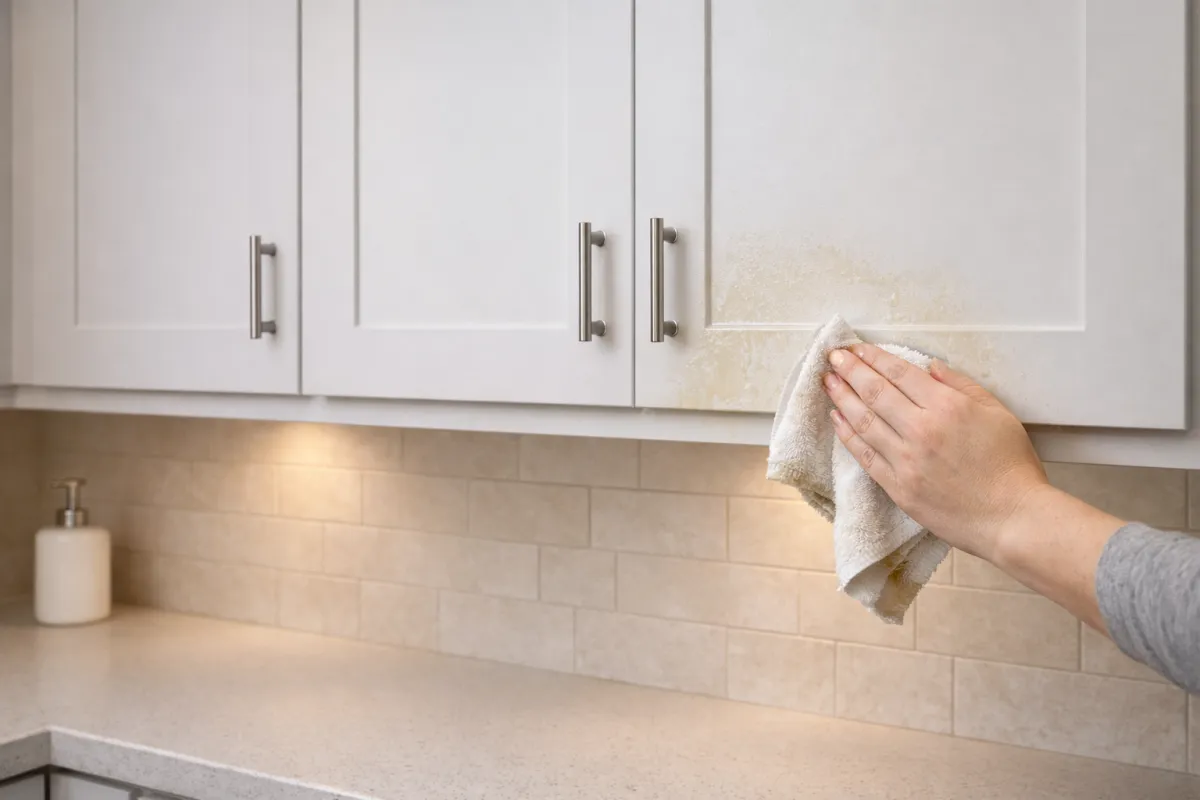
Why Your Kitchen Cabinets Feel Sticky (And How to Fix Grease Buildup)
Why Your Kitchen Cabinets Feel Sticky (And How to Fix It Permanently)
You wipe your kitchen cabinets.
They look clean.
But when you touch them… they feel tacky, gummy, or slightly sticky.
If you’ve searched “sticky kitchen cabinets”, “grease buildup on cabinets”, or “how to degrease wood cabinets,” you’re definitely not alone. It’s one of the most common kitchen frustrations homeowners experience — especially in humid areas like Orlando and Central Florida.
The good news? Sticky cabinets are usually fixable. And once you understand what causes it, you can stop the problem from coming back.
Let’s break it down.
Why Kitchen Cabinets Become Sticky
Most homeowners assume stickiness means the finish is failing.
In reality, it’s usually a buildup problem.
Every time you cook, tiny particles of oil, grease, and food vapor rise into the air. These particles settle on nearby surfaces — including your cabinet doors.
Over time they combine with:
Dust
Cooking residue
Cleaning products
Florida humidity
This mixture forms a thin, invisible film that gradually becomes sticky.
The cabinets near your stove, microwave, or coffee station are almost always the first to show it.
Signs You’re Dealing With Grease Buildup on Cabinets
Sticky cabinets often start subtly.
You may notice:
• Cabinet doors feel tacky when you open them
• Fingerprints appear easily
• Dust sticks to the surface
• The finish looks dull or cloudy
• Cleaning temporarily helps, but the stickiness returns
If this sounds familiar, you’re almost certainly dealing with grease buildup on cabinets rather than permanent finish damage.
How to Degrease Wood Cabinets (Safely)
Before reaching for harsh chemicals, start with the safest and most effective method.
Step 1: Warm Water + Dish Soap
Dish soap is designed to cut grease.
Mix:
2 cups warm water
A few drops of mild dish soap
Use a soft microfiber cloth and gently wipe cabinet surfaces.
Follow immediately with a clean damp cloth to remove residue.
Dry with a towel.
For light buildup, this is often enough.
Step 2: Vinegar Solution for Moderate Grease
If the stickiness remains, try this solution:
Mix:
1 part white vinegar
2 parts warm water
Lightly dampen a cloth and wipe the cabinet doors.
Vinegar breaks down grease effectively — but use it sparingly and avoid soaking the wood.
Always dry the surface afterward.
Step 3: Baking Soda Spot Treatment
For stubborn areas near the stove:
Make a paste using baking soda and water
Gently rub with a soft cloth
Wipe clean immediately
Use very light pressure to avoid dulling the finish.
What NOT to Use on Wood Cabinets
Many homeowners accidentally damage cabinet finishes while trying to remove grease buildup.
Avoid using:
❌ Magic erasers
❌ Steel wool
❌ Bleach-based cleaners
❌ Ammonia-heavy degreasers
❌ Abrasive scrubbing pads
These products can strip or scratch the protective finish.
Once the finish is compromised, cabinets become even more prone to grease buildup and staining.
Why Sticky Cabinets Are Common in Orlando Kitchens
Central Florida kitchens deal with something most other regions don’t:
High humidity year-round.
Humidity causes grease particles to cling to surfaces more easily. Instead of drying and dispersing, they stay slightly tacky.
That’s why homeowners in Orlando and surrounding areas often notice:
Sticky cabinets near the range hood
Grease buildup around coffee stations
Cabinet surfaces that attract dust
The climate simply accelerates the process.
When Sticky Cabinets Mean the Finish Is Wearing Out
Sometimes cleaning doesn’t solve the issue.
If your cabinets:
• Stay sticky even after degreasing
• Feel rough or uneven
• Have areas where the sheen has disappeared
• Show peeling or fading
…the protective finish may be breaking down.
At that point, the surface absorbs oils more easily.
That’s when many homeowners start exploring updated cabinet options designed with more durable finishes.
You can see modern all-wood cabinet styles built for durability here:
👉 https://timelesskitchenoutlet.com/cabinets
A high-quality cabinet finish should resist grease buildup and stay smooth for years.
How to Prevent Sticky Cabinets in the Future
Once cabinets are properly cleaned, keeping them that way is simple.
Try these habits:
✔ Wipe cabinets lightly once per week
✔ Run your kitchen vent hood when cooking
✔ Clean cabinet surfaces monthly with mild soap
✔ Keep areas near the stove grease-free
✔ Use microfiber cloths instead of abrasive sponges
Small maintenance steps prevent heavy buildup.
And in a kitchen that’s used every day, that makes a big difference.
If You're Considering Updating…
If you're considering updating your Orlando kitchen cabinets, persistent stickiness can sometimes be a sign that the cabinet finish has simply reached the end of its lifespan.
Newer cabinet finishes are designed to be more resistant to grease, humidity, and everyday kitchen wear.
You can explore cabinet options here:
👉 https://timelesskitchenoutlet.com/cabinets
Sometimes a simple cleaning solves the issue.
Other times, the problem reveals an opportunity to refresh the heart of your kitchen.
FAQ: Sticky Kitchen Cabinets
Why do my kitchen cabinets feel sticky even after cleaning?
Sticky cabinets often result from grease buildup that wasn't fully removed. Oils from cooking combine with dust and humidity, creating a film that requires proper degreasing with soap or vinegar solutions.
What is the best way to degrease wood cabinets?
The safest method is warm water with mild dish soap. For heavier grease buildup, a diluted vinegar solution can help break down oils without damaging the cabinet finish.
A sticky cabinet door may seem like a small problem.
But it’s often the kitchen quietly telling you something about its environment, its finishes, and the way it’s used.
Understanding that difference helps you fix it — and keep it from coming back.