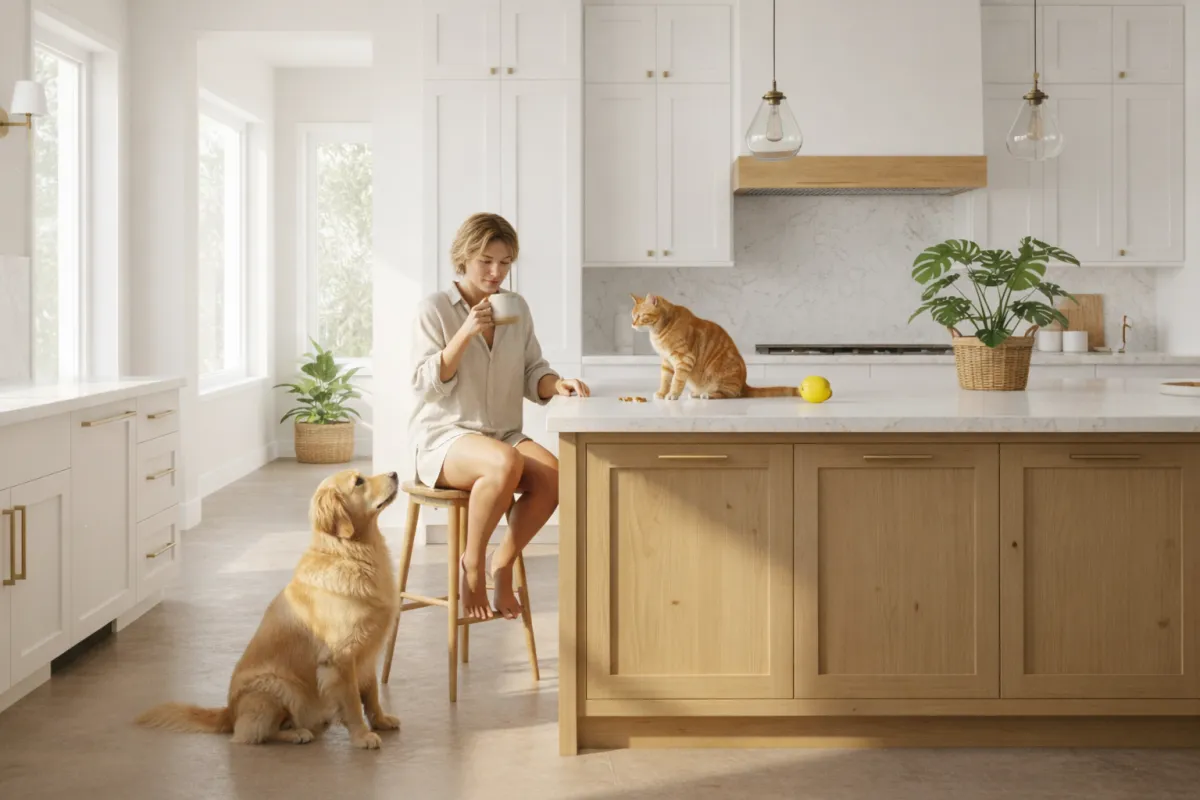
The Psychology of Effortless Luxury: Calm, Timeless Interior Design
The Psychology of Effortless Luxury: Why Beautiful Spaces Make Us Feel Calm, Confident, and at Home
Luxury is often mistaken for price — marble counters, designer furniture, dramatic lighting, rare finishes. But true luxury has very little to do with how much something costs… and everything to do with how a space makes you feel.
Walk into a genuinely elegant room, and something subtle happens:
You exhale
Your shoulders relax
Your senses quiet down
Nothing is shouting for attention — yet everything feels intentional.
This is the quiet power of effortless luxury. It is not defined by excess, novelty, or trend. It is defined by proportion, restraint, balance, light, and emotional harmony. And when those elements are aligned, a room doesn’t just look beautiful — it changes the way we move, think, and feel inside it.
Luxury Isn’t Loud — It’s Calm, Balanced, and Emotionally Intelligent
We live in a world where “more” is often celebrated:
More color
More features
More decoration
But in truly refined spaces, the opposite is true.
There is:
Space to breathe
Rhythm instead of noise
Presence without clutter
Beautiful rooms don’t overwhelm your senses — they organize them. They guide your eye smoothly from one element to the next, creating ease instead of stimulation.
This feeling is influenced by:
Visual balance
Material softness
Sympathetic lighting
Intentional spacing
Emotional flow
Nothing is present by accident — and that intention is what makes a room feel complete.
Effortless Luxury Begins With Intention — Not Decoration
Decoration fills space. Design shapes experience.
Intention becomes the invisible thread connecting every element in a room:
The way light moves across stone
The alignment of cabinetry and doorways
The softness of textures that complement each other
Even silence has a place in design.
In Japanese design philosophy, this is called ma — the space between things that allows beauty to breathe.
In European design traditions, it is expressed through proportion — the quiet confidence of balanced forms.
Effortless luxury exists between these principles. It is the moment where nothing needs to be justified — because everything feels right.
Why Some Rooms Feel Peaceful — and Others Feel Mentally “Loud”
A room can be visually impressive — yet emotionally overwhelming.
Spaces feel stressful when:
Too many elements compete for attention
Surfaces demand constant focus
Colors vibrate instead of harmonize
Lighting creates glare rather than softness
Your brain never finds a place to rest.
By contrast, calm and elegant spaces:
Guide the eye gently
Align sightlines
Use texture to soften edges
Apply contrast purposefully
Prefer matte finishes that diffuse light
These rooms don’t try to perform — they support the people who live in them.
True luxury does not insist on being noticed. It invites you in.
The Emotional Power of Texture, Light, and Material Warmth
Before we interpret a room logically, we experience it through the senses.
Textures such as:
Linen
Oak wood grain
Honed stone
Matte finishes
create warmth, depth, and comfort.
These materials:
Age gracefully
Feel natural and grounded
Encourage touch rather than avoid it
Luxury is not about gloss or shine — it is about richness and depth. A polished surface says, “look at me.”
A matte surface says, “you belong here.”
That difference is emotional, not merely aesthetic.
Editing With Compassion — The Secret Behind Effortless Luxury
Effortless luxury is not about removing things for the sake of minimalism. It is about protecting the feeling of the room.
A helpful question to ask is:
Does this object support the experience of the space — or does it compete with it?
Objects that distract:
Break emotional clarity
Interrupt visual harmony
Create unnecessary noise
Objects that remain should:
Add beauty
Add usefulness
Strengthen the overall experience
This approach creates rooms that feel:
Simple but not empty
Calm but not sterile
Edited but not cold
They are not lacking — they are peaceful.
The Psychology of Flow — When a Room “Makes Sense” Without Effort
In an effortless space, movement feels natural.
Good flow means:
Pathways are unobstructed
Furniture supports conversation
Cabinetry and architecture respect visual lines
Movement through the room happens intuitively
When flow is right:
The body feels at ease
The mind stops negotiating with the space
Energy in the room feels light and unforced
This is the psychology of elegance — it removes friction.
How Beautiful Spaces Influence the Way We Live and Feel
A well-designed room does more than look beautiful. It shapes:
Mood
Focus
Social connection
Rest
Emotional wellbeing
Calm rooms encourage softer behavior.
Inviting kitchens inspire conversation and gathering.
Harmonious spaces slow the pace of daily life.
Luxury, in this sense, is not about excess. It is about alignment between:
Who we are
How we live
And how our environment supports us
Design, at its highest level, is not decoration.
It is empathy — expressed through form, light, and intention.
Closing Thought: Effortless Luxury Begins With Awareness
Effortless luxury is not something you purchase — it is something you cultivate.
It begins with:
Choosing harmony over noise
Allowing beauty to breathe
Designing with intention rather than impulse
Prioritizing emotion over attention
Understanding how space affects how we feel
When your space supports your inner rhythm, your home becomes more than a place you live.
It becomes an experience — calm, confident, and quietly alive.