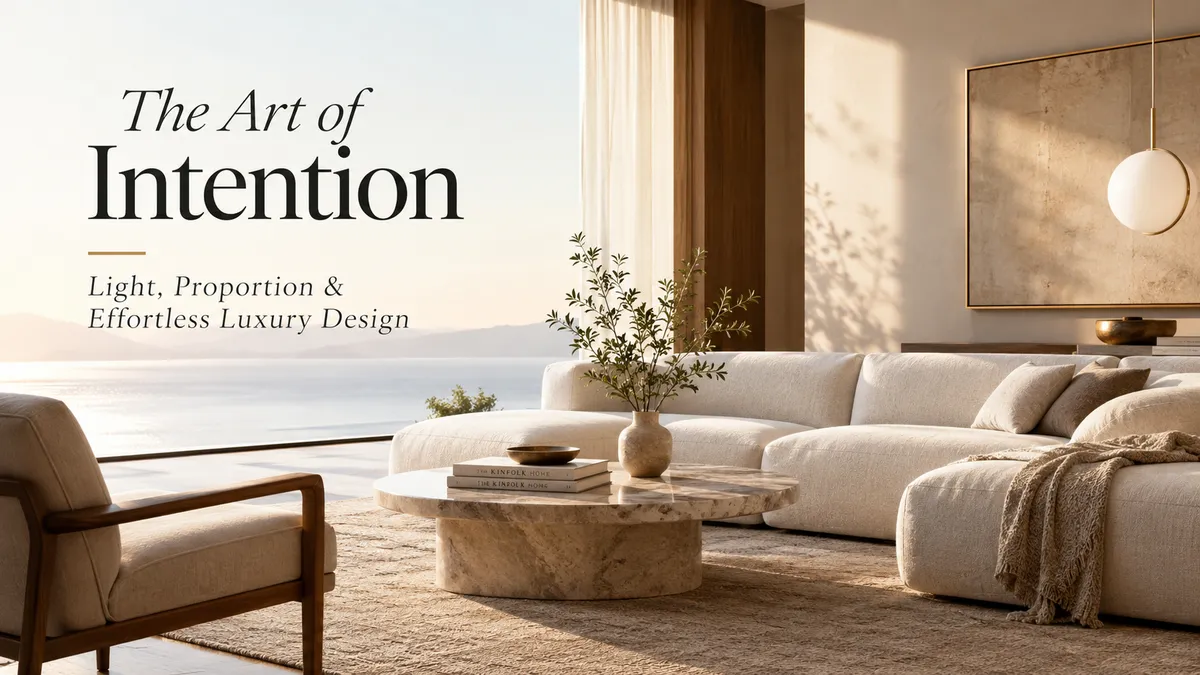
The Art of Intention: Light, Proportion & Effortless Luxury Design
The Art of Intention: How Designers Use Light, Proportion, and Space to Create Effortless Luxury
In truly elegant spaces, beauty is never accidental. It is the result of intention — the subtle alignment of light, proportion, texture, and flow working together in quiet harmony.
Effortless luxury is not created through excess or decoration. It comes from choices that feel inevitable. Nothing shouts, nothing competes — yet everything feels right.
This is the art of designing with intention.
Rather than asking, “What can we add?”
Great designers ask, “What deserves to remain?”
Because luxury is not about more. It is about meaning, restraint, proportion, and presence.
What “Intention” Really Means in Interior Design
Intention is the invisible structure beneath every beautiful space. It guides decisions long before color, furniture, or décor enter the picture.
Design intention considers:
How light enters and moves through the room
Where the eye naturally travels
How people walk, sit, gather, and pause
Which elements should anchor the space
Where contrast should create depth — and where silence should soften
Instead of designing at a space, intention means designing with it.
In European design philosophy, this respect for proportion gives rooms a sense of quiet confidence.
In Japanese design culture, intention is expressed through ma — the space between things — allowing beauty to breathe.
Effortless luxury exists in the conversation between these ideas.
Why Proportion Makes a Space Feel Instantly More Luxurious
A room can be filled with expensive finishes and still feel wrong if the proportions are off.
Proportion affects:
How grounded or heavy a room feels
Whether elements feel balanced or overwhelming
Whether the room feels harmonious or chaotic
Examples of proportion in action include:
Cabinets aligning with door frames and major sightlines
Kitchen islands sized to anchor — not dominate — the room
Tile patterns that support the scale of the space
Furniture arranged to frame movement rather than block it
When proportion is right, the space feels composed and intelligent — even before the details are noticed.
Luxury is not created through decoration. It appears naturally when proportions feel inevitable.
The Role of Light — The Most Powerful Design Tool in the Room
Light shapes atmosphere before anything else does.
It influences:
Mood
Color perception
Texture depth
Emotional warmth
Intentional design considers:
Where natural light falls during the day
How soft or direct artificial light should feel
Which surfaces reflect light — and which should diffuse it
Matte and honed finishes soften light, creating calmness and depth. Glossy surfaces reflect glare and visual noise if used without purpose.
Light should:
Guide the eye
Create rhythm
Support the room’s emotional tone
When used with restraint, light becomes a quiet storyteller in the space.
Space and Flow — Designing Rooms That “Move” Naturally
A luxurious space feels effortless to walk through.
Flow is the emotional rhythm of the room — the path your eye and body follow without resistance.
Good flow includes:
Clear movement pathways
Furniture arranged in conversation with architecture
Sightlines that rest instead of collide
Openings that feel like transitions, not interruptions
Rooms feel uncomfortable when:
Walkways are cramped
Furniture blocks circulation
Visual weight pulls the eye off balance
When flow is right:
The room feels calm
Movement feels intuitive
The space supports how people naturally live and gather
This sense of ease is one of the strongest psychological signals of luxury.
Contrast and Restraint — The Duality That Creates Depth
A space without contrast feels flat, no matter how refined the materials.
Effortless luxury balances:
Light and shadow
Warm and cool tones
Smooth and textured surfaces
Soft matte against calm reflective accents
Contrast creates visual depth — but intention ensures it never becomes noise. Restraint is equally important.
Removing unnecessary elements:
Protects visual clarity
Strengthens focal points
Allows materials to express their character
Luxury is not created by filling space. It emerges through disciplined editing.
Why Intention Makes a Room Feel Calm, Confident, and Timeless
Spaces designed with intention feel:
Calm — because nothing competes
Grounded — because proportions are balanced
Intelligent — because details have purpose
Timeless — because they are rooted in principles, not trends
Effortless luxury is not about wealth or extravagance. It is about understanding:
How light behaves
How proportion influences emotion
How space guides movement
How restraint creates meaning
When these elements work together, design becomes almost invisible — yet deeply felt.
The room doesn’t need to announce itself.
It simply feels right.
Intention is the quiet art behind every beautiful space. It is the discipline of designing slowly, thoughtfully, and with awareness of how a room will not only look — but also how it will make people feel.
Because in the end…
Luxury isn’t loud.
It doesn’t demand attention.
It lives in balance, proportion, and quiet confidence.
And when intention leads the design — beauty follows naturally.