Kitchen Flood Damage Insurance Claims: 7 Steps to Take
Kitchen Flood Damage: 7 Things to Do Before Filing an Insurance Claim
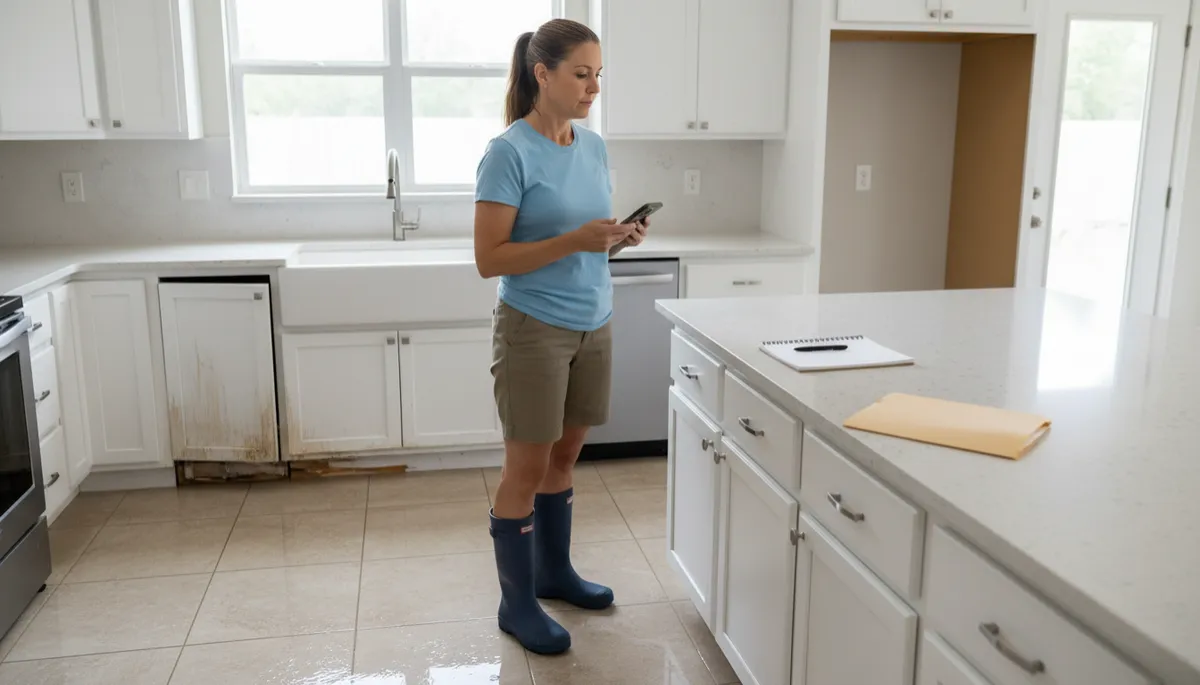
You walk into your kitchen after a night of heavy rain and immediately notice something is wrong.
Water has reached the lower cabinets. The floor is soaked. Perhaps the cabinet doors no longer close properly, or the wood around the base has begun to swell.
Your first instinct may be to start cleaning everything up.
But before you remove damaged materials or begin rebuilding your kitchen, there are important steps that can protect your safety and help you document your insurance claim.
Following the November 2026 flooding in parts of Brevard County and Central Florida, understanding what to do next is especially relevant.
If your kitchen has flooded, prioritize safety, report the loss promptly, document the damage, and arrange appropriate water mitigation. You do not have to wait for the adjuster before reporting a claim.
Step 1: Make Sure Your Kitchen Is Safe to Enter
Never enter a flooded kitchen if there may be electrical hazards, structural damage, or contaminated standing water.
Do not touch wet outlets, appliances, or electrical equipment.
Have qualified professionals address electrical and other hazards before entering or beginning cleanup.
Floodwater may contain sewage, chemicals, or other contaminants, even when it appears relatively clear.
Your family's safety comes before photographs, cabinet inspections, or insurance paperwork.
Step 2: Contact Your Insurance Company as Soon as Possible
Once immediate safety concerns are addressed, report the damage to your insurance provider.
Explain what happened, when you discovered the damage, and how water entered the property.
Ask whether your claim should be handled under a flood insurance policy, homeowners insurance, or another applicable coverage.
You can begin reporting the loss even if your property is not yet safe to enter.
Request a claim number and keep a record of your communications.
Step 3: Photograph the Entire Kitchen Before Cleanup
Good documentation helps establish what happened and the extent of the visible damage.
Take photographs and videos of:
The entire kitchen from multiple angles
Visible floodwater and water lines
Lower kitchen cabinets and toe kicks
Cabinet interiors and drawer compartments, if safe to open
Warped cabinet doors and swollen panels
Wet countertops, backsplash areas, and flooring
Appliances exposed to water
Nearby walls and baseboards
Photograph damage before items are removed whenever it is safe to do so.
Keep copies of the original images.
Step 4: Have the Kitchen Assessed for Hidden Moisture
One of the biggest mistakes after flooding is assuming that the damage ends where the water line stops.
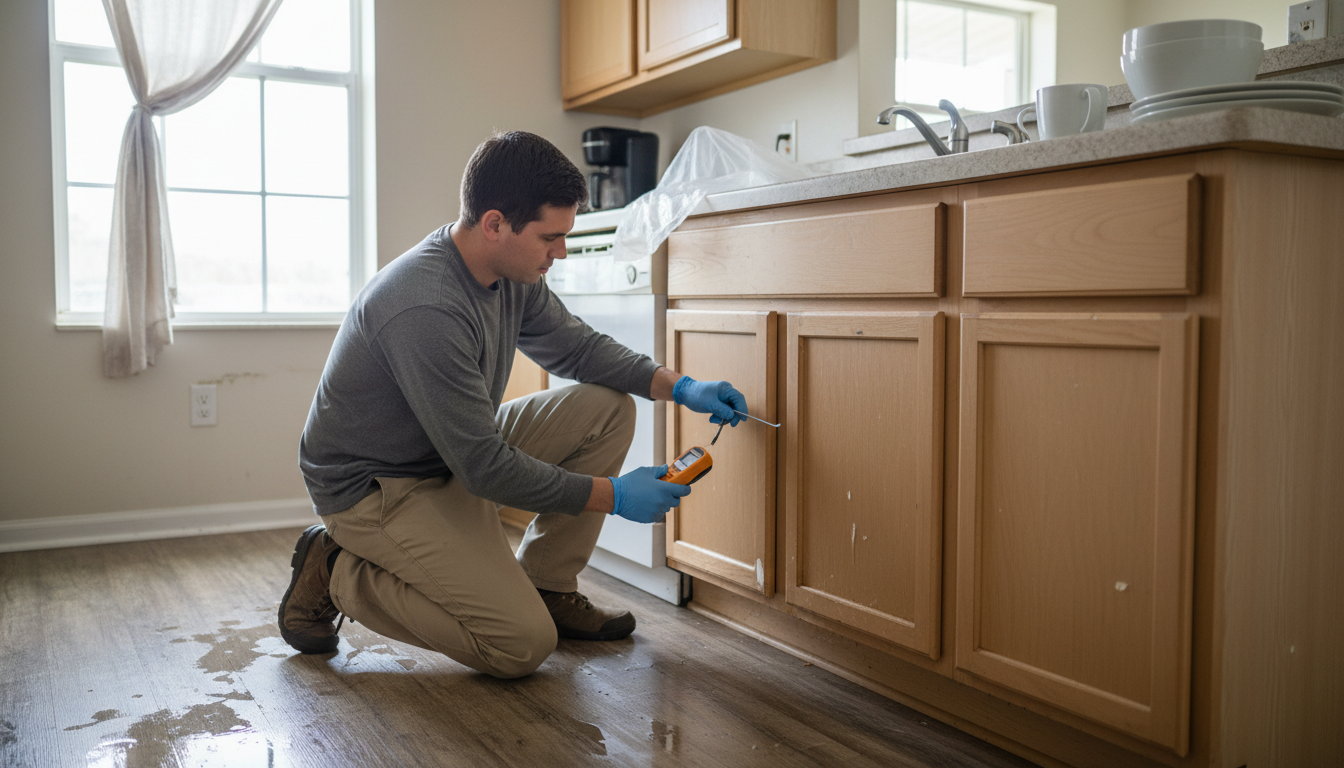
Moisture can remain behind cabinet panels, underneath flooring, and inside walls.
A qualified water-damage restoration professional can assess moisture levels, determine what materials may be salvageable, and recommend appropriate mitigation.
If floodwater was contaminated, specialized cleaning or removal may be necessary.
The goal is not simply to make the kitchen look dry.
It's to address the underlying damage before reconstruction begins.
Step 5: Avoid Throwing Away Evidence Without Documenting It
Some damaged items must be removed quickly because they pose health risks.
When possible, take photographs before disposal and retain small material samples if your insurer requests them and they can be handled safely.
Keep invoices for emergency cleanup, drying, removal, and other necessary work.
Don't allow damaged materials to remain in place simply because an insurance adjuster has not visited yet.
Prompt mitigation can help prevent additional deterioration.
Step 6: Obtain a Detailed Kitchen Cabinet Replacement Estimate
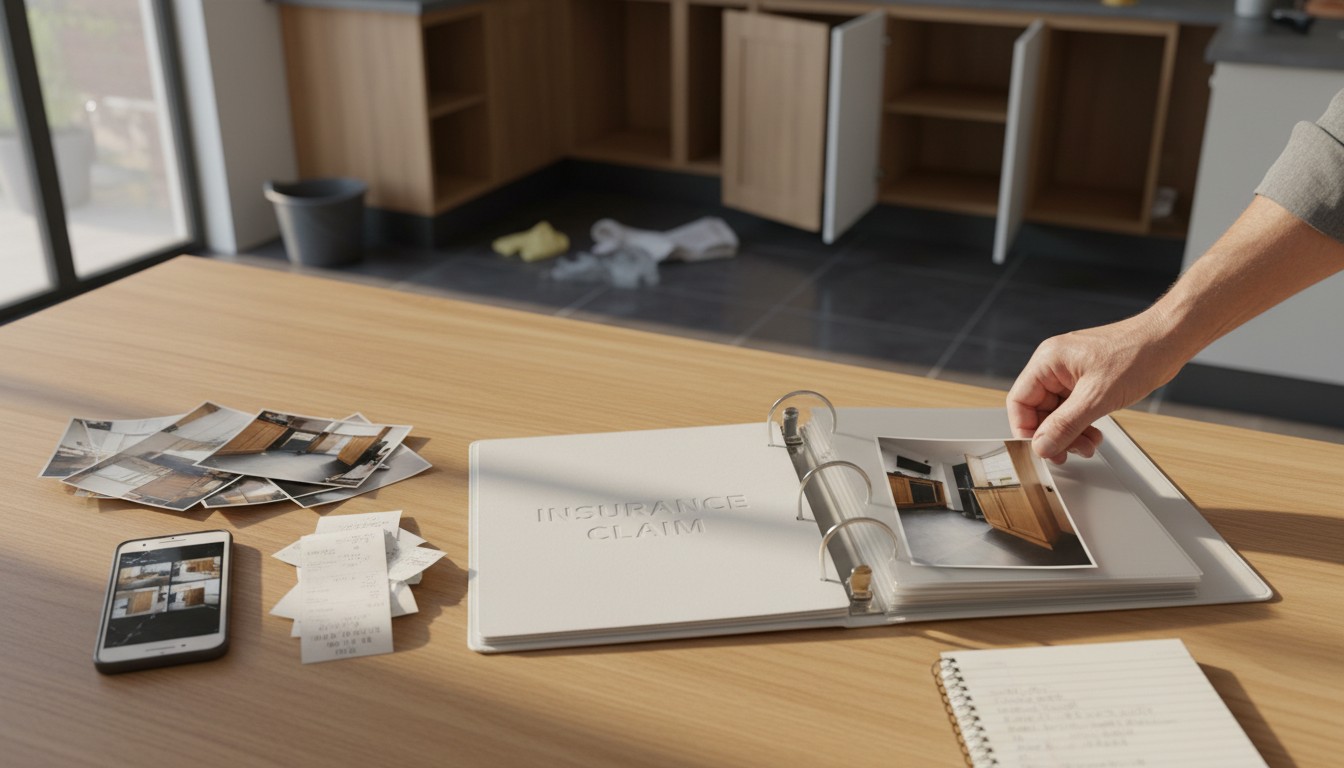
If an assessment determines that cabinetry cannot be safely restored, the next step may be obtaining a replacement estimate.
A useful cabinet estimate may identify:
Cabinet dimensions and quantities
Base cabinets, wall cabinets, and pantry units
Cabinet construction and finish
Drawers, doors, and hardware
Installation requirements
Related work that may be necessary
The estimate can help communicate the proposed replacement scope.
Keep in mind that a contractor's estimate is not the same as an insurer's coverage determination.
If you're considering upgrades beyond restoring the damaged kitchen, request that those additional improvements be identified separately.
Step 7: Don't Rush Into Rebuilding Before the Kitchen Is Ready
It's understandable to want your kitchen back as soon as possible.
But reinstalling cabinets before the affected walls, floors, and surrounding areas have been appropriately cleaned, dried, and evaluated can create additional problems.
Work with qualified professionals to establish when reconstruction can safely begin.
Ask your insurer how to coordinate necessary repairs, inspections, estimates, and claim documentation.
A thoughtful restoration process gives your new cabinets a better foundation for long-term use.
Frequently Asked Questions
Should I remove wet kitchen cabinets before the insurance adjuster arrives?
Necessary mitigation should not be delayed when wet materials present safety or deterioration risks. Document the cabinets thoroughly, contact your insurer, and coordinate removal with qualified restoration professionals.
Does flood insurance pay for kitchen cleanup?
Some cleanup-related expenses may be covered under applicable flood insurance provisions. Ask your insurer which services are eligible and what documentation is required.
Should I get a kitchen cabinet estimate before insurance approval?
A detailed estimate can be useful when discussing damage and potential replacement costs with your adjuster. However, you should clarify coverage and payment arrangements before committing to major non-emergency work.
Can I upgrade my kitchen after a flood insurance claim?
You may choose to make improvements during the restoration process, but optional upgrades are not automatically covered. Separate the costs of covered restoration from the additional improvements you wish to make.
Getting Your Kitchen Back Begins With a Good Plan
After a flood, the kitchen you once took for granted can suddenly become the room you miss the most.
The familiar routine of preparing breakfast, sharing meals, or gathering around the counter is interrupted.
Recovering that sense of home takes more than replacing what was damaged.
It takes careful planning, safe restoration, and the right cabinetry for your space.
If your kitchen cabinets require replacement after water damage, Timeless Kitchen Outlet can help you explore cabinetry and remodeling options for the next stage of your project.
Visit our showroom:
2591 N Forsyth Rd, Suite B, Orlando, FL 32807
Call: (321) 284-2580
Website:https://timelesskitchenoutlet.com/
This article provides general restoration and insurance information. Claim procedures and coverage depend on the policy and circumstances. TKO does not provide insurance adjusting or emergency water mitigation services.